
ESCAIDE 2026 - A summary of day 3
The third day of the conference explored topics including modelling and quantitative methods, the involvement of the public in public health and biological threats. Discussions once more emphasised the need for cross-sectoral collaboration and multidisciplinary approaches to complex infectious disease issues.
Plenary session on modelling for better public health
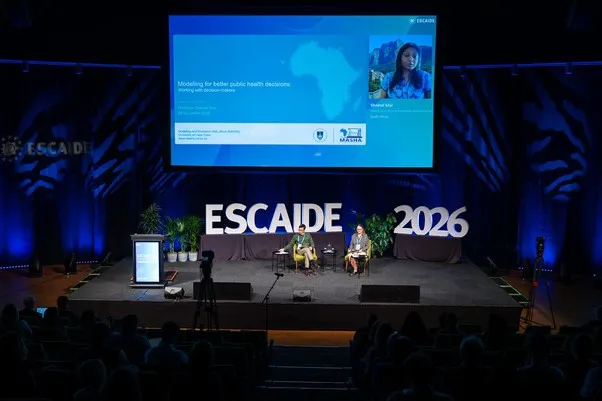
Day 3 of ESCAIDE 2026 opened with the final Plenary session on “Modelling for better public health”. The session sought to look beyond the technical aspects of mathematical modelling and explore the real-world contexts in which it is applied. The panel of speakers included professors in modelling and medical ethics, who discussed recent advances in infectious disease modelling, including the growing role of AI and data-intensive approaches, before turning to the realities of applying models in public health decision-making, including the importance of trust and transparency.
“I never had to sacrifice model complexity for the sake of communication. You can still explain it conceptually. As a lecturer, I have learnt how to do that. You can also use communications specialists to help you. And AI is also fantastic in providing supporting tools to explain complexity.” said Sheetal Silal of the modelling and Simulation Hub, University of Cape Town, South Africa).
Julian Savulescu from the National University of Singapore noted that "Ethics is absolutely essential to modelling."
Thematic sessions
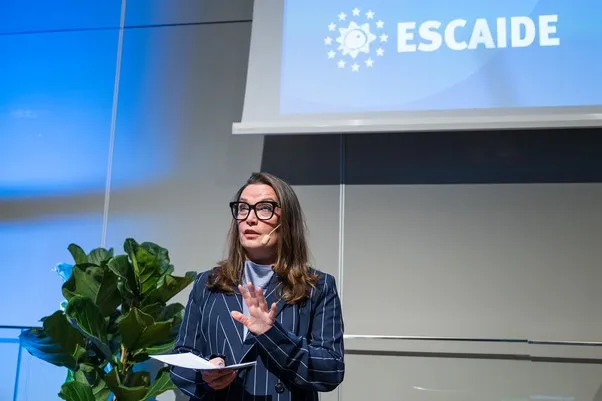
Following a morning coffee break, the last set of Fireside sessions continued on the topic of quantitative methods, as well as more late breaker abstracts on outbreaks of cholera, meningitis and meningococcal B. In parallel Thematic session 5: Can public health work without the "public"? asked the question of whether Public Health can work without the “public”, and included speakers discussing citizen engagement and the role of civil society.
Barbara Albiger, chairing the session, asked "What happens when the people we want to protect do not trust the science.... they do not feel that science or public health speak for them. What changes can we drive in science and public health when we listen to the people we want to serve?"
Stacey Vickers of the European Commission told the audience about a European Commission initiative: “The “Citizens panel on preparedness” was set up in 2021 by the EC to make sure the public is involved in the discussions. A survey showed that only half of the EU citizens are informed about preparedness. There are now EU guidelines on preparedness and around 160 citizens came to Brussels in person last year to work on them.”
“Gaining trust is difficult, maintaining it is also more difficult and regaining it is almost impossible, so we need to make sure to keep it” added Albiger.
Career Compass
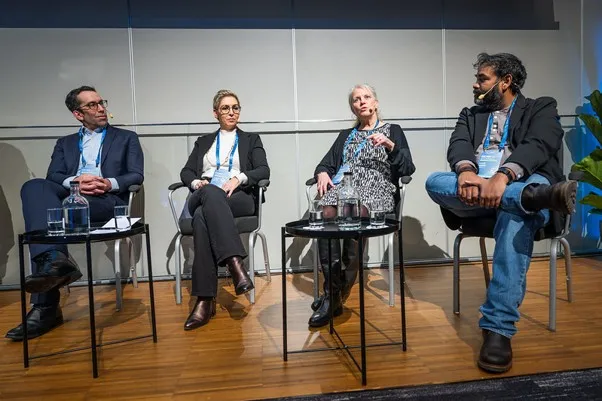
During the lunch break, participants could attend this year’s edition of the Career Compass, in which a panel of professionals from different sectors answered audience questions and shared their experience and advice. A group of onsite participants also took part in a simulation exercise on bridging the gap between disciplines in times of crisis.
Last sessions of the day
The last sessions before the closing ceremony included a final set of poster tours as well as a thematic session on cross-sectoral (chemical, biological, radiological, and nuclear) threats.
ESCAIDE 2026 closed with an awards ceremony for best abstract presentations and the results of the photo competition.